

Friendship Retreats, why take the time?
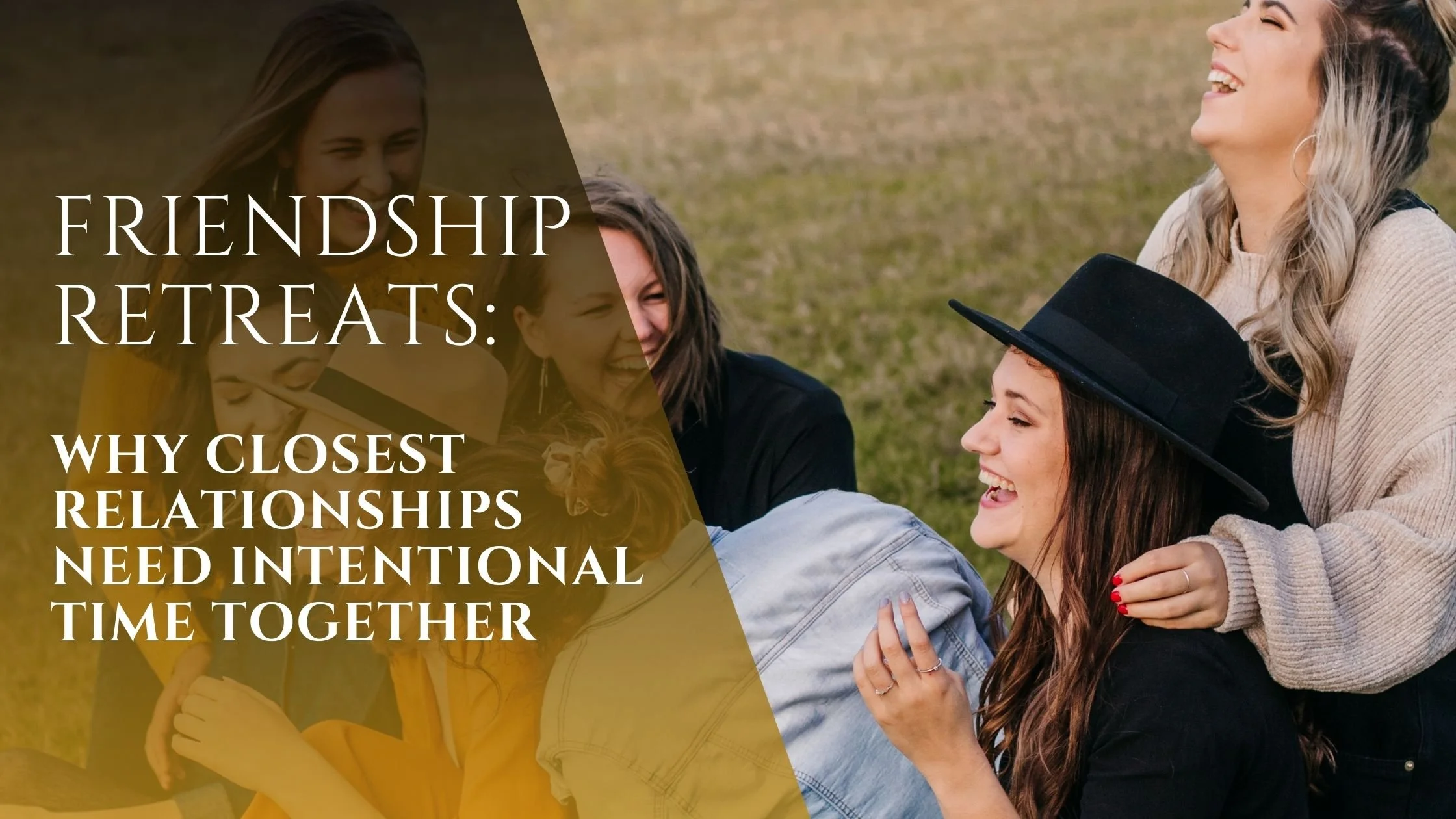
Friendship Retreats: Why Your Closest Relationships Need Intentional Time Together
We schedule date nights with partners, family reunions with relatives, and playdates for our children. But when was the last time you prioritized intentional, quality time with your closest friends? As research increasingly reveals the profound health benefits of friendship, a new trend is emerging: friendship retreats. And the science suggests they might be one of the most important investments you can make in your wellbeing.
The Loneliness Epidemic and Friendship Crisis
Despite unprecedented digital connectivity, rates of loneliness have reached crisis levels. Research from the Harvard Study of Adult Development, one of the longest-running studies on human happiness, found that the quality of relationships—particularly friendships—predicts health, happiness, and longevity more powerfully than genes, IQ, or socioeconomic status.
Yet adult friendships face unique pressures. Work demands, family responsibilities, and geographic dispersion make maintaining close friendships increasingly challenging. Studies show that after age 25, our social networks begin shrinking, and the time devoted to friendships decreases significantly. This trend has serious health implications.
The Health Benefits of Strong Friendships
Research published in PLOS Medicine analyzing 148 studies found that people with strong social relationships had a 50% increased likelihood of survival compared to those with weaker social connections. This effect exceeded the impact of quitting smoking and rivaled the effects of obesity and physical inactivity.
The mechanisms behind this effect are physiological. Close friendships reduce cortisol levels, lower blood pressure, and strengthen immune function. Studies show that social interaction stimulates production of oxytocin, dopamine, serotonin, and endorphins—neurochemicals essential for stress reduction, mood regulation, and overall wellbeing.
The Quality vs. Quantity Distinction
Importantly, research distinguishes between casual social contact and meaningful connection. A study in Social Psychological and Personality Science found that deeper, more substantive conversations predicted greater wellbeing than small talk. Quality of friendship interaction matters more than quantity of contacts.
This is where friendship retreats offer unique value. Unlike brief catch-ups over coffee or text exchanges, retreats provide extended, uninterrupted time for genuine connection. Research on relationship depth shows that vulnerability, shared experiences, and time spent together strengthen bonds in ways that fragmented interactions cannot replicate.
Shared Experiences and Memory Formation
Neuroscience research reveals that shared novel experiences create particularly strong bonding effects. Studies show that experiencing new environments and activities together enhances relationship satisfaction and creates lasting memories that strengthen connection long after the experience ends.
Retreat environments amplify these effects by removing daily distractions, providing novel experiences, and creating space for the vulnerability that deepens friendships. Research on disclosure and intimacy shows that sharing personal struggles and growth in supportive environments accelerates relationship deepening that might otherwise take years.
The Co-Regulation Effect
Polyvagal theory research explains how friends literally regulate each other's nervous systems through physical presence, synchronized breathing, and attuned communication. This "co-regulation" creates physiological safety that reduces stress and enhances resilience. Video calls and text messages cannot replicate these regulatory effects, which require in-person presence.
Studies examining friendship quality during the COVID-19 pandemic found that while digital connection helped maintain relationships, it couldn't replace the regulatory benefits of physical togetherness. Post-pandemic, many people report feeling disconnected from friends despite regular digital contact—a phenomenon researchers attribute to lack of embodied co-regulation.
Investing in Friendship
Research on relationship maintenance shows that friendships require intentional investment to thrive. Yet modern culture provides few frameworks for prioritizing friendships. We have wedding ceremonies, anniversary celebrations, and family holidays—but few culturally sanctioned ways to honor and nurture friendships.
Friendship retreats fill this gap, providing dedicated time and space to invest in relationships that profoundly impact health and happiness. Studies on relationship satisfaction show that novel shared experiences, quality time, and mutual support—all central features of retreats—strengthen bonds and increase relationship longevity.
The Ripple Effects
The benefits extend beyond the participants. Research shows that strong friendships enhance capacity for other relationships, including romantic partnerships and family connections. People with robust friendship networks report greater life satisfaction, better mental health, and increased resilience during difficult times.
Moreover, friendship groups create what researchers call "prosocial contagion"—positive behaviors, attitudes, and habits spread through social networks. Retreat experiences that promote wellbeing, self-awareness, and growth can catalyze positive changes that ripple through friendship circles and beyond.
In a world that often treats friendship as secondary to work and family, retreats offer radical recognition of what research has long confirmed: our closest friendships aren't luxuries—they're essential medicine for body, mind, and spirit.
References:
Waldinger, R. J., & Schulz, M. S. (2010). What's love got to do with it? Social functioning, perceived health, and daily happiness in married octogenarians. Psychology and Aging, 25(2), 422-431.
Holt-Lunstad, J., Smith, T. B., & Layton, J. B. (2010). Social relationships and mortality risk: A meta-analytic review. PLOS Medicine, 7(7), e1000316.
Mehl, M. R., Vazire, S., Holleran, S. E., & Clark, C. S. (2010). Eavesdropping on happiness: Well-being is related to having less small talk and more substantive conversations. Psychological Science, 21(4), 539-541.
Aron, A., Norman, C. C., Aron, E. N., McKenna, C., & Heyman, R. E. (2000). Couples' shared participation in novel and arousing activities and experienced relationship quality. Journal of Personality and Social Psychology, 78(2), 273-284.
Porges, S. W. (2022). Polyvagal Theory: A Science of Safety. Frontiers in Integrative Neuroscience, 16, 871227.